
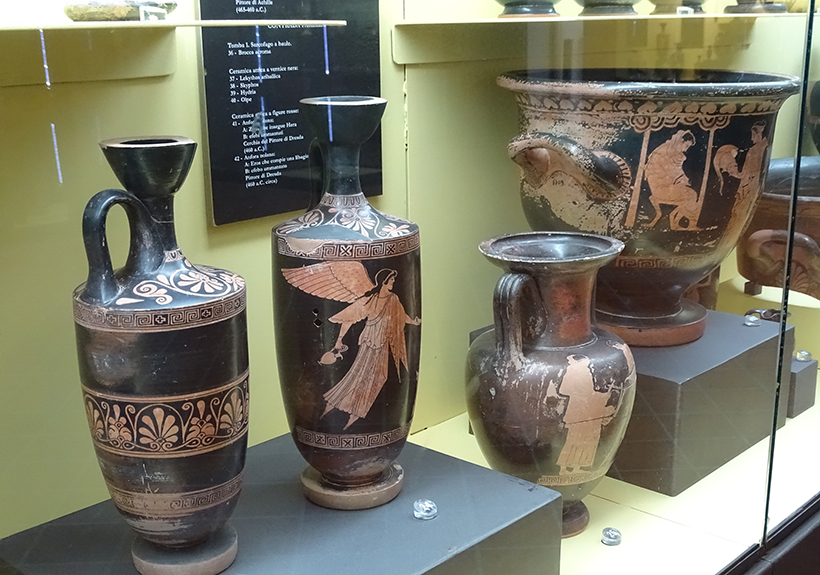
Museo

20 Maggio 2018
museo

Il Museo è limitrofo all’area dell’acropoli della città greca.

La sede museale, è un edificio realizzato negli anni Cinquanta e nasce come Museo nazionale, dove allora fu considerato tra  i più moderni d’Italia. Nel 1984, dopo alcuni lavori di ampliamento resi necessari per l’incremento dei materiali da esporre, il Museo venne riaperto con un nuovo allestimento.

Gli ultimi interventi effettuati a partire dal 1995 lo hanno interamente rinnovato nei percorsi espositivi e negli apparati didattici e didascalici.

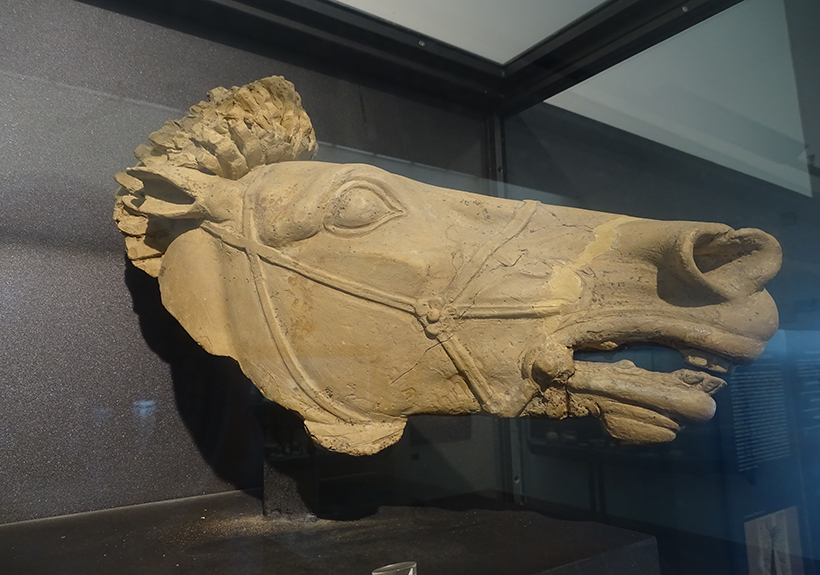
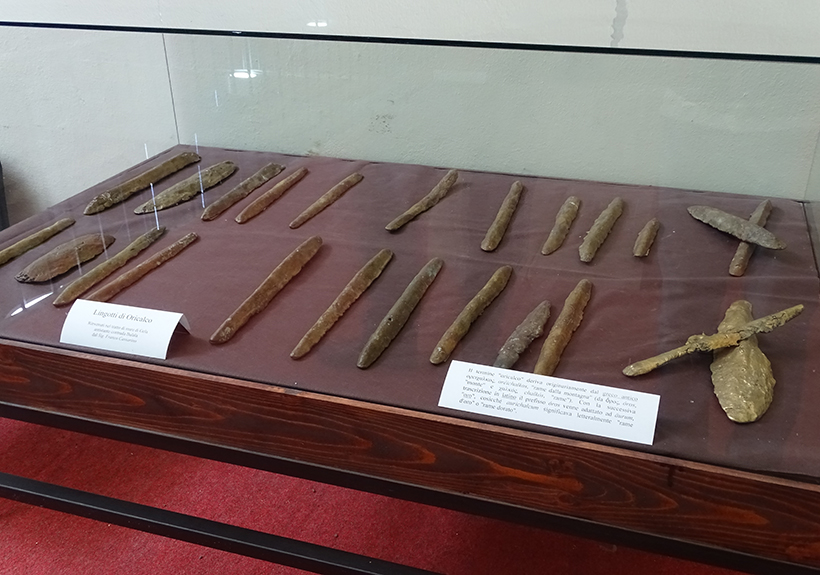
Il museo illustra attraverso reperti ceramici, bronzei e numismatici, la storia di Gela antica e del territorio ad essa connesso, dall’età preistorica all’età medievale.
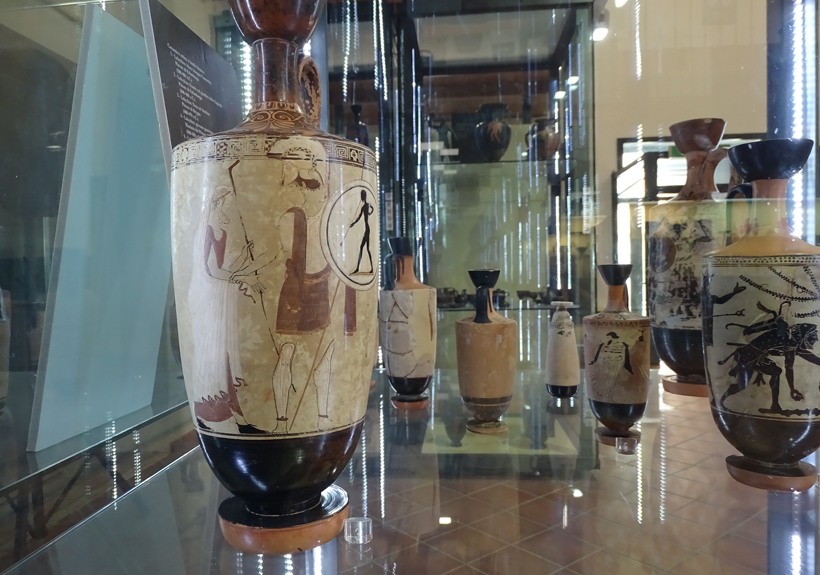
Gela fu la prima colonia rodio-cretese fondata in Sicilia, secondo Tucidide, nel 689-688 a.C. La città divenne ben presto una delle più importanti dell’isola fino a rivaleggiare con la stessa Siracusa.

Le sue mire espansionistiche per il controllo del territorio la portarono a fondare nel 581 a. C. Akragas (Agrigento), e successivamente ad estendere il proprio dominio fino allo Stretto.

Dopo la metà del V sec. iniziò il suo declino. Nel 405 a.C. fu conquistata e distrutta dai Cartaginesi. Ricostruita nel IV sec. a.C., fu successivamente oggetto di attacchi da parte di Siracusa, fin quando tra il 285 e il 282 a. C. fu distrutta dal tiranno agrigentino Phintias che trasferì i suoi abitanti presso Licata dove nacque una nuova città chiamata Phintiade.
 

Le collezioni. Il nucleo più antico è costituito dalle collezioni Navarra e Nocera. La prima, acquistata negli anni Cinquanta dal museo, comprende un cospicuo numero di vasi corinzi ed attici a figure nere e a figure rosse, provenienti dagli scavi clandestini delle necropoli e raccolti alla fine dell’Ottocento dal barone Giuseppe Navarra.

Tra i vasi attici a figure nere (fine VI, inizi V sec. a.C.) si ritrovano opere attribuite al Pittore di Gela e al Pittore di Eucharides, e molte lekythoi della “classe di Phanillys”. Tra i vasi attici a figure rosse (prima metà del V sec. a.C.) sono esposti quelli del Pittore di Edimburgo, del Pittore di Boreas, del Pittore della Phiale di Boston, del Pittore dei Porci, del Pittore di Berlino e del Pittore di Brygos. Si tratta di opere di grandi ceramografi (decoratori di oggetti in terracotta) attici giunte a Gela con navi mercantili. Il relitto di una di queste imbarcazioni è stato ritrovato di fronte alla costa ed ha consentito di ricavare dati fondamentali per lo studio dell’architettura navale antica e dei traffici commerciali che l’antica colonia intratteneva con le altre città della Grecia.

L’ordinamento è di tipo cronologico e si articola in otto grandi sezioni, nelle quali l’esposizione è associata a materiale didattico e didascalico.
Piano terra

Sezione I la storia, la preistoria, l’acropoli (dalla fondazione al V sec. a.C.) e l’acropoli (IV sec a.C.), l’Emporio, la Nave

Sezione II l’Heraion, la città fra il IV e il III sec. a.C.

Sezione III le Fornaci, l’Epigrafia

Sezione VIII le Necropoli greche, la Collezione Navarra, la Collezione Nocera

Primo piano

Sezione IV le anfore

Sezione V i Santuari extraurbani.

Sezione VI il territorio dalla Preistoria all’età greca.

Sezione VII il territorio dall’età romana all’età mediovale.

Dip. BB.CC. Regione Siciliana

Lascia un commento

Il tuo indirizzo email non sarà pubblicato. I campi obbligatori sono contrassegnati *

Museum

20 Maggio 2018
Museum

The Museum is adjacent to the acropolis area of the Greek city.

The premises were built in the fifties and were born as a National Museum, which was then considered one of the most modern in Italy. In 1984 it was opened again with a new arrangement, after being enlarged for exhibiting new material.
The last works made in 1995 have completely renewed its exhibition route and explanatory facilities.

The museum illustrates the history of ancient Gela and its surroundings through pottery, bronzes and coins dated, from prehistory to Middle Age.

Gela was the first Rodian-Cretan colony founded in Sicily, according to Thucydides, in 689-688 BC. It soon became one of the most important towns of the island and was a rival of Siracusa itself.
Aiming to expand and control the area, it founded Akragas (Agrigento) in 581 BC, and later extended its power up to the Strait of Messina.
In the second half of the 5th century it started declining. In 405 BC it was conquered and destroyed by the Carthaginians. Rebuilt in the 4th century BC, it was attacked many times by Siracusa and between 285 and 282 BC it was destroyed by the tyrant of Agrigento, Phintias, who moved its inhabitants to Licata where he founded a new town called Phintiade.


The collections. The oldest core is constituted by the Navarra and Nocera collections. The former was bought in the 50s and includes a big number of Corithian and Attic vases with black or red figures, coming from the clandestine excavations made in the necropolises and collected in the end of the 19th century by Baron Giuseppe Navarra.
Some of the Attic vases with black figures (end 6th-beginning 5th century) are attributed to the Painter of Gela and to the Painter of Eucharides, and many lekythoi of the “Phanillys class”. Some of the Attic vases (first half 5th c. BC) exhibited were made by the Painter of Edinburgh, Painter of Boreas, Painter of the Phiale of Boston, Painter of the Porci, Painter of Berlin and Painter of Brygos. They are important Attic terracotta painters who arrived in Gela by merchant boats. The wreck of one of these boats was found off the coast and it offered the chance of obtaining important data for studying the ancient naval architecture and the trade between the old colony and other towns in Greece.

The arragement follows chronological criteria and is articulated in eight big sections, each with explanatory materials.

Ground floor
Section 1 the history, the prehistory, the acropolis(from the establishment up to 5th c. BC) and the acropolis (4th c. BC), the Emporium, the Boat
Section 2 The Heraion, the town between 4th-3th c. BC.
Section 3 The Kilns, Epigraphy
Section 8 The Greek necropolises, the Navarra and Nocera Collections

First floor
Section 4 The amphorae
Section 5 the extra-urban sanctuaries.
Section 6 The area from the Prehistory up to the Greek period.
Section 7 The area from the Roman period to the Middle Ages.

Department of Cultural Heritage Sicilian Region

Lascia un commento

Il tuo indirizzo email non sarà pubblicato. I campi obbligatori sono contrassegnati *

Betzoid Explores Casinos con Depósito Mínimo de 10 Soles Peruanos