
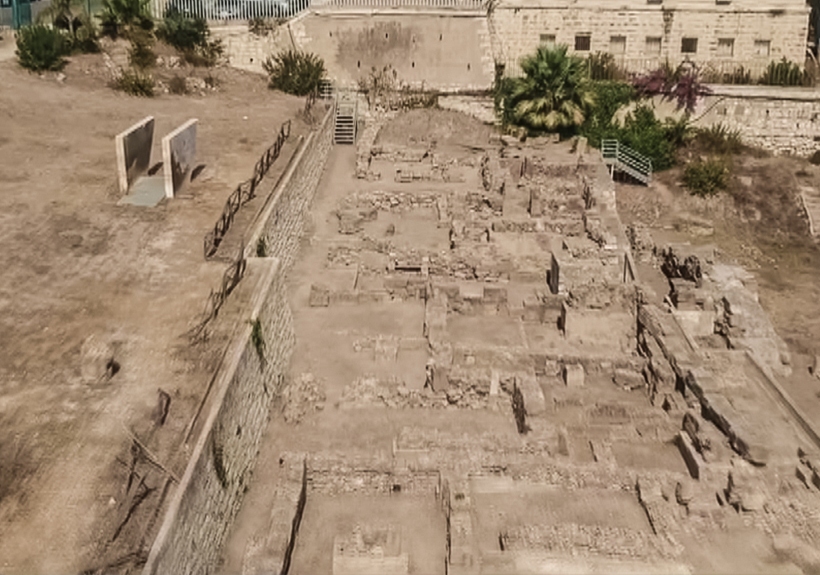
Acropoli di Gela

Situata in prossimità del Museo Archeologico Regionale, l’ Acropoli di Gela è uno dei siti archeologici di maggiore rilievo
in Sicilia. Luogo della fondazione dell’ antica Gela, l’ area risulta essere uno straordinario esempio di stratificazione
storica.
La prima fase registrata dagli scavi effettuati tra gli anni ’50 e ’60 del ‘900 ,provano che l’ area, prima dell’ arrivo dei coloni
rodio-cretesi, era già occupata in epoca preistorica da insediamenti indigeni databili tra il IV ed il II millennio a.C..
Dopo una fase di abbandono, il sito fu nuovamente occupato intorno all’ VIII secolo a. C. da un piccolo insediamento
precedente alla fondazione di Gela , una proto-colonia alla quale era stato dato il nome di Lindioi, come riportato dagli
storici Tucilide ed Erodoto. Lindioi fu dunque un primo avamposto-emporio che aprì la strada alla fo0ndazione di Gela
da parte dei rodiesi guidati da Antifemo e dei cretesi guidati da Entimo.

Nella prima metà del VII secolo a. C. nell’area furono costruiti alcuni edifici come ad esempio un sacello dedicato ad
Athena Lindia, la dea protettrice della città, i cui resti furono poi inglobati nelle fondazioni di un secondo tempio
costruito nel corso del VI secolo a.C. e dedicato ancora ad Athena.
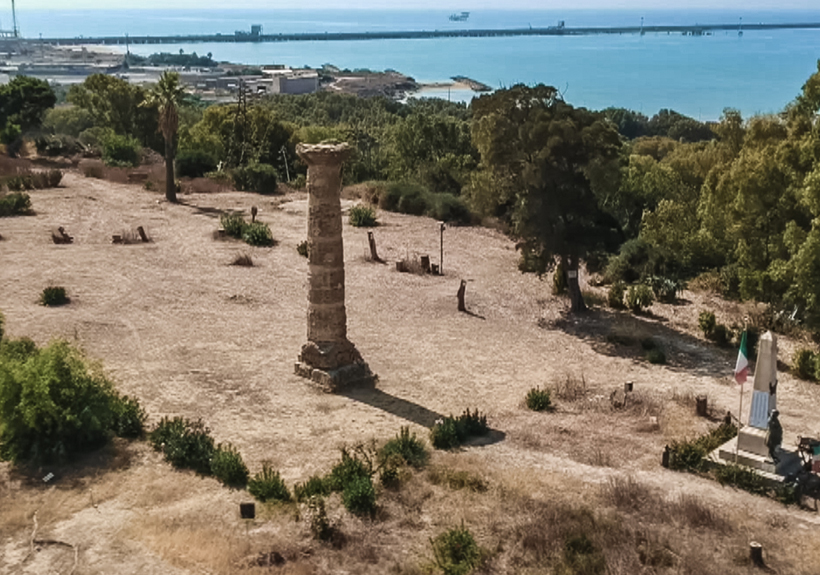
È nel V secolo a.C. che l’ acropoli subisce le maggiori trasformazioni. Sotto i Dinomenidi, tiranni della città, si da inizio ad
un importante progetto di monumentalizzazione attraverso la costruzione di imponenti edifici. Nel 480 a.C. a seguito
della vittoria dei greci sui cartaginesi nella grande Battaglia di Himera, il tiranno di Gela Ierone decide di edificare un
nuovo tempio dedicato ad Athena, di cui oggi ci rimane una sola colonna.
L’ edificio sacro, con peristasi di 6 x 12 colonne, fu ornato da elementi marmorei importati dalle Cicladi, decorati da
motivi policromi. Anche gli altri edifici della zona furono sfarzosamente arricchiti da elementi architettonici, quali
acroteri equestri ed antefisse fittili.
L’ acropoli, come dimostrano alcuni strati di macerie, fu distrutta nel 405 a.C. a seguito del saccheggio della città da parte
dei cartaginesi guidati da Himilko. Attraverso il riutilizzo dei materiali e delle vestigia degli antichi templi, venne
impiantata tra la fine del V e la prima metà del IV sec. a.C. una stoà (un portico), ancora oggi visibile nelle strutture ben
conservate poste sul lato nord.
A seguito della rifondazione di Gela (339 a.C.) da parte di Timoleonte sul lato ovest della collina, l’ area dell’ acropoli
venne definitivamente abbandonata. Dell’ antico sito primigenio non rimanevano che alcune colonne, di cui ci rimangono
tracce storiche nei racconti di Edrisi (XII sec. d.C.) e Guido delle Colonne (XIII sec. d.C.).

[simple-author-box]

Lascia un commento

Il tuo indirizzo email non sarà pubblicato. I campi obbligatori sono contrassegnati *

Acropolis of Gela

21 Maggio 2018
news, places of interest

Located near the Regional Archaeological Museum, the Acropolis of Gela is one of the most important archaeological sites in Sicily. The site of the foundation of the ancient Gela, this area is an extraordinary example of historical stratification.
The first phase, recorded by the excavations carried out between the 50s and 60s of the 20th century, proves that, before the arrival of the Rhodium-Cretan settlers, this area was already occupied in prehistoric times by indigenous settlements dating from between the 4th and 2nd millennia BC.
After a period of neglect, this site was occupied again around the 8th century BC by a small settlement prior to the founding of Gela, a proto-colony which had been given the name of Lindioi, as reported by historians Thucydides and Herodotus. Lindioi was therefore a first outpost-emporium that paved the way to the foundation of Gela by the Rhodians led by Antiphemus and the Cretans led by Entimus.

In the first half of the 8th century BC, some buildings were built in this area, such as a sacellum dedicated to Athena Lindia, the patron goddess of the city, whose remains were then incorporated into the foundations of a second temple built during the 6th century BC, which is still dedicated to Athena.

It was in the 5th century BC that the acropolis underwent its greatest transformation. Under the Deinomenids, tyrants of the city, an important project of monumentalization was started through the construction of imposing buildings. In 480 BC, following the victory of the Greeks over the Carthaginians in the Great Battle of Himera, the tyrant Hieron of Gela decided to build a new temple dedicated to Athena, of which only one column remains today.
The sacred building, with a peristasis of 6 x 12 columns, was adorned with marble elements imported from the Cyclades, decorated with polychrome motifs. The other buildings in the area were also magnificently enriched with architectural elements, such as equestrian acroteria and terracotta antefixes.
The acropolis, as proven by some layers of rubble, was destroyed in 405 BC after the city was looted by the Carthaginians led by Himilko. A stoa (market) was installed by reusing materials and remains of the ancient temples, between the end of the 5th and the first half of the 4th century BC, which can still be seen in the the well-preserved structures located on the north side.
Following the refoundation of Gela (339 BC) by Timoleon on the west side of the hill, the area of the acropolis was definitively abandoned. There were only a few columns left from the ancient primeval site , of which historical traces remain in the tales by Al-Idrisi (12th century AD) and Guido delle Colonne (13th century AD).

[simple-author-box]

Lascia un commento

Il tuo indirizzo email non sarà pubblicato. I campi obbligatori sono contrassegnati *

Betzoid Explores Casinos con Depósito Mínimo de 10 Soles Peruanos