
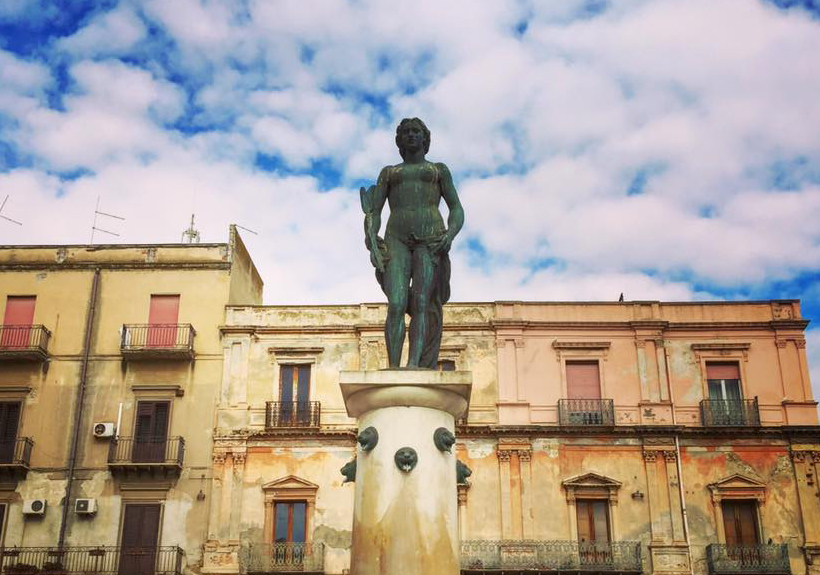
STATUA DI CERERE “Fimmina Nura”

20 Maggio 2018
luoghi di interesse

“Scaldava troppo gli uomini…” così scriveva Andrea Rapisarda su “Cronache della Politica e del Costume” nel 1954, anno in cui la Statua di Cerere veniva collocata in Piazza Umberto I, dinanzi al sagrato del Duomo .

Opera di Silvestre Cuffaro, considerato tra i più grandi artisti del tempo, la statua bronzea, da tutti definita “Fimmina Nura”,  suscitò nel giorno del suo svelamento opinioni contrapposte:  Da una parte l’allora parroco del Duomo che arrivò a minacciare il blocco dei festeggiamenti della patrona Maria SS. d’Alemanna, dall’altra l’on. Aldisio, allora Ministro delle Infrastrutture, che per cercare di placare gli animi dei più pii,  fece aggiungere un velo per coprire parte delle nudità della dea.
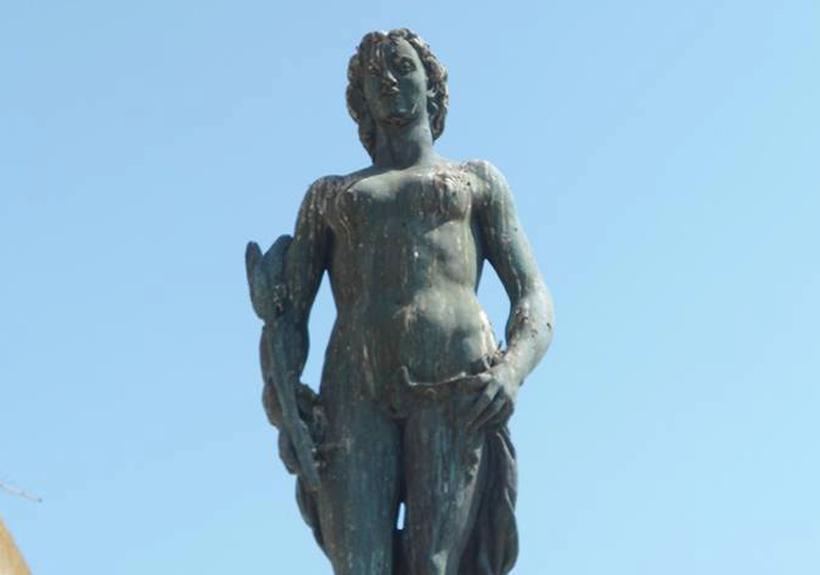
L’opera di Silvestre Cuffaro richiama in se il gusto classicheggiante, visibile nei lineamenti e nella statuaria. L’abbondanza delle forme e la presenza di spighe di grano sul braccio destro,  delineano un parallelismo con la figura di Cerere, mentre la base marmorea  un collegamento tra la città moderna e la gloria del passato.

Attraverso questa immagine Silvestre Cuffaro volle rappresentare Gela, un’opera dalla grande forza che riassume in se secoli di storia.

La Statua, sopravvissuta per ’60 anni a diversi progetti di ricollocazione,  è oggi uno dei simboli della città di Gela, testimone di numerosi eventi storici che hanno caratterizzato la città in più di mezzo secolo.

Lascia un commento

Il tuo indirizzo email non sarà pubblicato. I campi obbligatori sono contrassegnati *

STATUE OF CERES ‘Fimmina Nura’

20 Maggio 2018
places of interest

‘She excited men too much…’ as Andrea Rapisarda wrote in “Chronicles of Politics and Costume” in 1954, the year in which the Statue of Ceres was placed in Piazza Umberto I, in front of the churchyard of the Cathedral.
The work of Silvestre Cuffaro, considered one of the greatest artists of his time, the bronze statue, referred to as ‘Fimmina Nura’ (The Naked Woman) by everyone, aroused opposing opinions on the day of its unveiling – on the one hand, the parish priest of the then Cathedral who threatened the blockade of the celebrations of the patron saint Mary of Alemanna, on the other, Hon. Aldisio, then Minister of Infrastructure, who added a veil to cover part of the nudity of the goddess, seeking to calm down the pious.

The work of Silvestre Cuffaro recalls the classical taste, which can be seen in the features and in the statue making. Her generous shape and the presence of ears of wheat on her right arm create a parallel with the figure of Ceres, while the marble base represents a link between the modern city and the glory of the past.
Through this image, Silvestre Cuffaro wanted to represent Gela, a work of great strength that summarizes centuries of history.
The statue, which survived several relocation projects for 60 years, is now one of the symbols of the city of Gela, witness to numerous historical events that have characterized the city in more than half a century.

Articoli Correlati:

Lascia un commento

Il tuo indirizzo email non sarà pubblicato. I campi obbligatori sono contrassegnati *

Betzoid Explores Casinos con Depósito Mínimo de 10 Soles Peruanos