
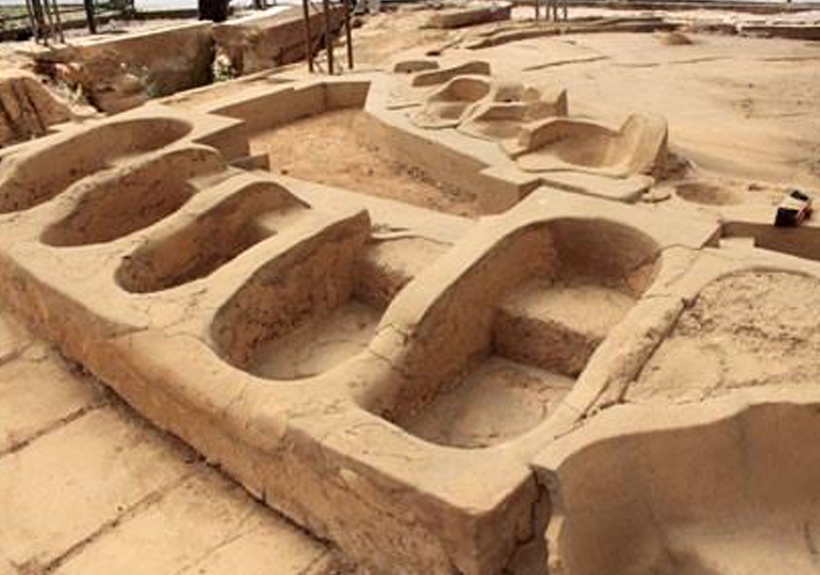
I Bagni Greci di Gela, le terme di 2500 anni fa.

I Bagni Greci, situati all’interno del circuito urbano della moderna Gela, risultano essere uno degli esempi meglio conservati di impianto termale di epoca ellenistica (IV-III sec. a.C.).

Costruiti a seguito della rifondazione di Gela da parte di Timoleonte, il complesso termale risultava essere, oltre che un’importante struttura per il benessere del corpo.  un luogo di incontro per gli antichi abitanti della città. Non è difficile pensare che personaggi come Archestrato o Euclide, che vissero a Gela  in quel periodo, utilizzarono queste strutture, a testimonianza dell’importanza storica dei siti archeologici presenti nel territorio.

Il complesso è caratterizzato da 3 ambienti, di cui due con  gruppi di vasche in terracotta.   Nel primo gruppo le vasche sono disposte a ferro di cavallo, mentre il  secondo gruppo è costituito da ben 22 vasche  disposte circolarmente.

È presente inoltre  un ambiente sotterraneo, ipocausto, dove veniva acceso il fuoco per riscaldare l’acqua destinata al  primo gruppo di vasche.
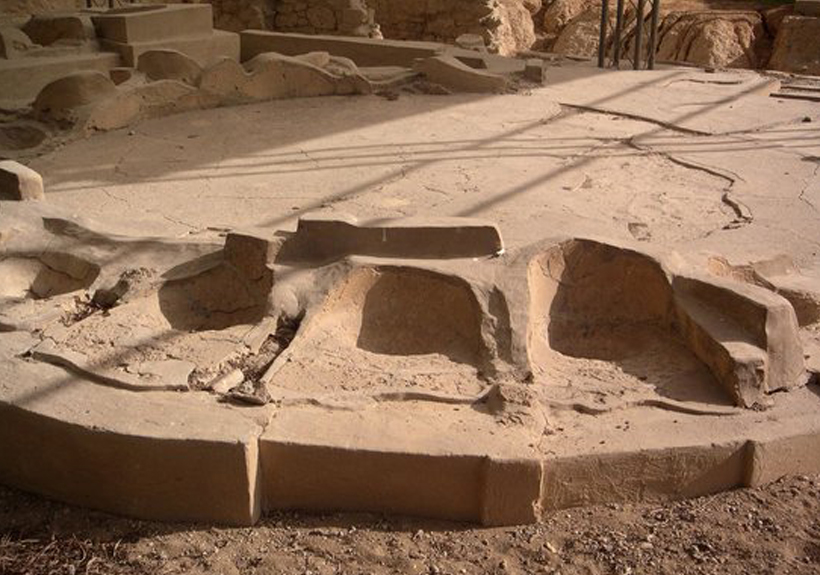
I Bagni Greci di Gela risultano essere  l’unico complesso di questo tipo  in Sicilia. Esso trova confronti con analoghi impianti greci di Delfi, di Olimpia, di Colofone, di Gortys, pur essi databili tra il IV e III sec. a.C.
La datazione è confermata dal ritrovamento di unguenti, di oscilla, di anfore di tipo italico punico, presenti negli ambienti dei bagni, nonché dalle monete di età timoleontea, alcune di conio siracusano (Trias: D/Testa di Athena con elmo corinzo; R/Ippocampo), di Gela (D/Testa di Zeus; T/ Testa di Demetra di tre quarti), di tipo siculo – punico (D/Testa di Persefone – Tanit; R/ Cavallo e palma) recuperate sul pavimento (Dip. BB. CC.)
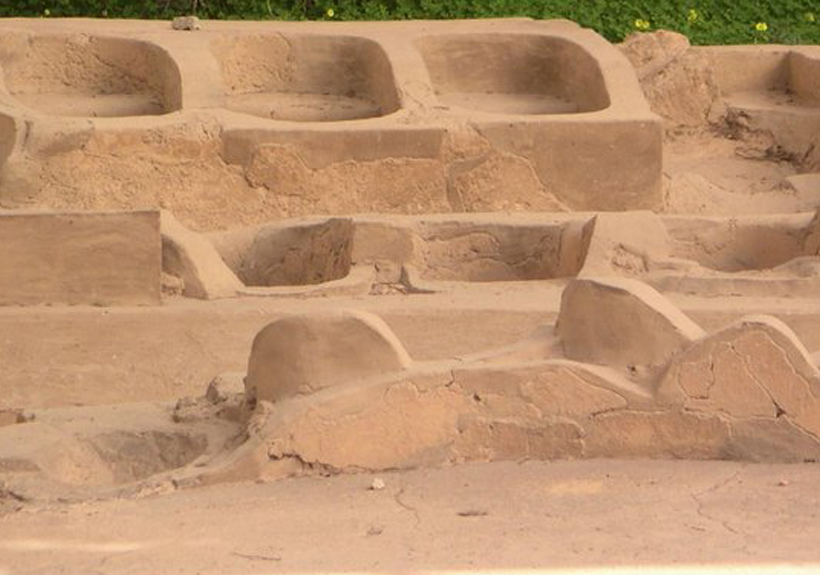
L’edificio venne distrutto nel 282 a.C. a seguito del saccheggio della città da parte dei Mamertini, mercenari campani che non lasciarono scampo alla città ricostruita da Timoleonte qualche decennio prima. Non vi sono tracce di un tentativo di riutilizzo, fatto da mettere in relazione con il trasferimento degli abitanti sopravvissuti nella nuova città di Finziade (odierna Licata)

One thought on “I Bagni Greci di Gela, le terme di 2500 anni fa.

  1. 27 Luglio 2019
    Rispondi

    E dopo la “fimmina nuda” oggi:
    Il più bel Anfiteatro del Mediterraneo sul mare:Teatro Greca da 2000 posti

Lascia un commento

Il tuo indirizzo email non sarà pubblicato. I campi obbligatori sono contrassegnati *

Greek Baths

21 Maggio 2018
news, places of interest

The Greek Baths, located within the city of modern Gela, are one of the best preserved examples of thermal plant of the Hellenistic period (4th-3rd century BC).
Built following the refoundation of Gela by Timoleonte, the baths were not only an important facility for body wellness, but also a meeting place for the ancient inhabitants of the city. It is not difficult to think that people like Archestratus or Euclid, who lived in Gela at that time, used these structures, bearing witness to the historical importance of the archaeological sites in the area.
The complex is characterized by 3 rooms, two of which have groups of terracotta tubs. In the first group the tubs are arranged in a horseshoe, while in the second group, made up of 22 tubs, these are arranged in a circle; there is also an underground room, called ‘hypocaust’, where fire used to be lit to heat the water intended for the first group of tubs.

The Greek Baths of Gela are a one-of-a-kind complex in Sicily. It can be compared with similar Greek facilities in Delphi, Olympia, Colophonus and Gortys, which also date from between 4th and 3rd centuries BC.
The dating is confirmed by the discovery of ointments, oscilla, Punic Italic amphorae, present in the above rooms, as well as coins of the age of Timoleon, some of which were minted in Syracuse (Trias: D/Athena’s Head with Corinthian helmet; R/ Hippocampus), in Gela (D/Zeus’s Head; T/ Demeter’s three-quarter Head), others of Siculo – Punic type (D/Persephone’s Head – Tanit; R/ Horse and palm) recovered on the floor (Department of Cultural Heritage)

The building was destroyed in 282 BC after the city was looted by the Mamertines, mercenaries from Campania who left no escape to the city rebuilt by Timoleon a few decades earlier. There is no trace of an attempt at reuse, which is related to the relocation of the surviving inhabitants to the new town of Phintias (now Licata).

Lascia un commento

Il tuo indirizzo email non sarà pubblicato. I campi obbligatori sono contrassegnati *

Betzoid Explores Casinos con Depósito Mínimo de 10 Soles Peruanos